Explore the new KineDok 2026/27 collection
KineDok presents a new curated collection of 18 documentary films – three of them in VR – available from May 2026 until April 2027 across all KineDok countries: Czechia, Slovakia, Hungary, Croatia and Romania. The films are accessible to screening venues throughout the network (with a few exceptions specified below), continuing KineDok’s mission to bring contemporary documentary cinema to diverse audiences and spaces.
This season, we have prepared a diverse selection of documentary films that explore current social topics, personal stories, and surprising views of the world around us. The programme includes films such as Mr. Nobody Against Putin, Coexistence, My Ass! and Bürglkopf (Out of Sight), which reflect contemporary social realities with both sensitivity and courage.
Alongside these, we are also presenting distinctive auteur and festival-acclaimed titles, as well as other powerful documentary statements spanning a wide range of themes – from intimate personal stories to broader social questions and global contexts. These include What about Petey?, a sensitive film about autism and family relationships, Better Go Mad in the Wild, awarded at the Karlovy Vary International Film Festival, and Fiume o Morte!, winner of the European Film Award 2026. Together with other successful festival titles, these films highlight the strong position of contemporary documentary cinema in both the European and global context.
This year’s selection also includes VR screenings featuring three projects – Wildlife in Europe, Out of Nowhere and Emperor. These works expand the traditional cinematic experience with a new level of immersion, allowing audiences to step directly into the film space.
"I am very pleased to see a significant growth this year not only in the number of screening venues, but also in the number of screenings themselves. I have only recently stepped into the role of KineDok manager, and I truly appreciate the strong and high-quality programme put together by the previous team. I’m glad that we can bring films into non-cinema spaces that inspire with their energy and openness, offering new perspectives on the world around us. At the same time, we are working intensively to further expand the network of screening venues so that KineDok can reach even wider audiences. We believe viewers will fall in love with these films just as we have,” says KineDok manager Juliana Moska.
These films will be screened in KineDok’s alternative venues – cafés, galleries, cultural centres, even barns or boats – places where film meets community and conversation.
Check our website for planned screenings – or join the project and become a screening venue yourself. Hosting is free and simple – bring documentary cinema to your town!
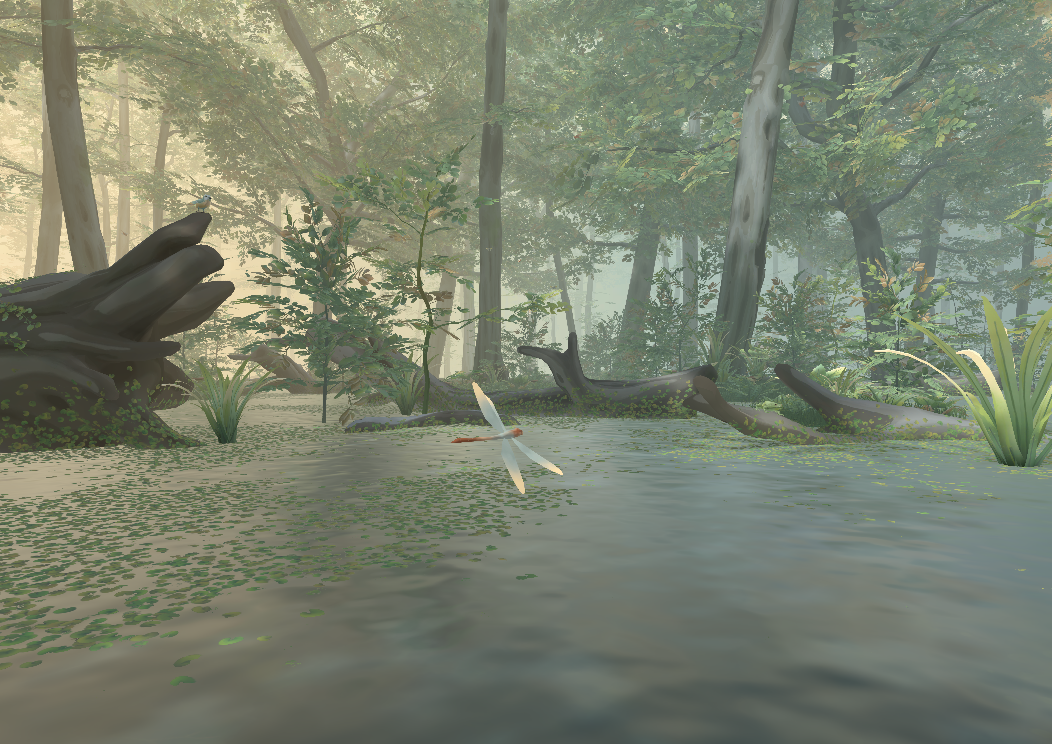
Wildlife in Europe (Blanche Denis & Antoine Andrier, 2026, France) – VR film
In this 360° experience, we discover how European wildlife lives in a landscape strongly shaped by humans. Lynx, bears, wolves, and deer are returning after a period of decline, bringing hope. Europe stands at a crossroads between conservation and the return of wilderness.
Emperor (Marion Burger & Ilan J. Cohen, 2023, France, Germany) – VR film
EMPEROR is an interactive narrative experience in virtual reality that invites the viewer on a journey into the mind of a father suffering from aphasia. Together with his daughter, we enter his inner world, rendered as a hand drawn monochrome landscape, and try to understand what the illness has concealed within him.
Out of nowhere (Kris Hofmann, 2025, Austria) – VR film
Our weather is becoming increasingly unpredictable. The film follows Anna from Hallein in Austria and shows how the restoration of floodplain forests, wetlands, and river ecosystems can help address climate change and protect us from extreme weather.
Mr. Nobody Against Putin (David Borenstein, Pavel Talankin, 2025, Denmark, Czechia)
A humble teacher from a small industrial town films everyday life at his school – his amateur footage gradually reveals the reality of life in Russia during the ongoing war against Ukraine. The film Mr. Nobody Against Putin is now feared even by the regime itself, banned by court, and closely monitored to prevent anyone in Russia from accessing it.
Not available in Hungary.
What about Petey? (Martin Trabalík, 2025, Czechia)
The documentary What About Petey? was filmed over three years using an observational approach. Director Martin Trabalík draws on personal experience to create an intimate portrait of the Jochec family and their everyday life, shaped by love, doubts, and perseverance.
Death of Death (Dāvis Sīmanis, 2025, Czechia, Latvia)
The essayistic documentary by director Dāvis Sīmanis explores not only the contemporary “market for eternal life” but also humanity’s deep-seated desire to transcend mortality. The film raises the question of whether the pursuit of immortality represents a real step toward human liberation or simply another way to cope with the inevitability of death.
Only available in Czechia and Hungary.
Better Go Mad in the Wild (Miro Remo, 2025, Slovakia, Czechia)
The film Better to Go Mad in the Wild follows the Klišík twins, eternal children living in the Šumava wilderness with their pets. Humor, daily routines, and the brothers’ contrasting souls create a magical portrait of life outside civilization.
Open (Diana Fabiánová, 2025, Slovakia)
What is fidelity, and where does trust end? Boundaries of Fidelity explores love, infidelity, and open relationships. Diana Fabiánová reveals the fragility of love’s limits through her own experiment with an open relationship.
Not available in Romania.
Voice of the Forest (Zuzana Piussi, 2025, Slovakia, Czech Republic)
In the Voice of the Forest, we hear everything we didn’t want to hear. The forest is cultivated with a saw. At least that’s what they still teach in forestry schools. But what does a healthy forest really need?
Only available in Slovakia and Romania.
My Chemical Information System (Márton Vizkelety, 2025, Hungary)
The film follows scientist Gyula Dékány, who has spent over 20 years between Europe and Australia developing breakthrough treatments for Parkinson’s and Alzheimer’s. A story of science, sacrifice, and the struggle to balance family and innovation.
Not available in Croatia.
My Father's Daughter (Lea Podhradská, 2025, Hungary)
Twenty-seven years ago, a young woman disappeared in Slovakia. Her sister, a filmmaker, sets out years later to uncover the truth and understand why her family seemed indifferent to her disappearance. The film follows the clash between a child’s imagination and reality, as well as a search for what really happened.
Fiume o Morte! (Igor Bezinović, 2025, Croatia, Slovenia, Italy)
The bizarre campaign of poet Gabriele D’Annunzio, who occupied Rijeka after World War I and proclaimed his own state, comes to life in Igor Bezinović’s film. Blending archival footage with irony, the film reveals the roots of fascism.
Pavilion 6 (Goran Dević, 2024, Croatia)
As the long-awaited COVID-19 vaccine brings a glimmer of hope, through candid conversations with people waiting in line for vaccination, this globally relatable film reveals the disorientation and skepticism that permeate our collective experience.
Not available in Czechia and Hungary.
Tooth and Nail (Mihai Gavril Dragolea, Radu Mocanu, 2025, Romania)
A Romanian activist, Tiberiu, documents illegal logging in state forests and publishes evidence online. Two journalists follow his path and find themselves in a dangerous, suspenseful story exposing corruption and the dark side of the forestry business.
Not available in Slovakia.
CALIU: Nothing else, what else can I do? (Simona Constantin, 2025, Romania)
Legendary violinist Caliu refuses to accept that his glory days are over and searches for a new path. Caught between memories of the past and the uncertainty of the present, music remains the only constant in his changing life.
Bürglkopf (Out of Sight) (Lisa Polster, 2025, Austria, Germany)
The ambivalent landscape of Tyrol near Bürglkopf Mountain. The idyllic Alpine scenery is disrupted by a strictly controlled asylum center with restricted access. Testimonies from both refugees and locals reveal the reality of a system in which, despite everything, people preserve their dignity and hope.
Coexistence, My Ass! (Amber Fares, 2025, USA, France)
Stand-up comedian Noam Shuster Eliassi challenges myths of coexistence in Israel through her sharp performance. As the conflict escalates, the film follows her journey and the role of humor in times of war. Premiered at Sundance FF, it won the World Cinema Documentary Special Jury Award for Freedom of Expression.
Kapitalism: Our Improved Formula (Alexandru Solomon, 2011, Romania, France)
Alexandru Solomon “invites” dictator Ceaușescu back to Romania 20 years after his execution. The dictator symbolically haunts contemporary capitalism. The film portrays powerful elites and creates a portrait of a new ruling class in “Capitalism with a capital K.”Even 16 years after film premiere, it remains surprisingly relevant.
KineDok is an international community-driven distribution project of the Institute of Documentary Film. This project is supported by Creative Europe MEDIA, Ministry of Culture Czech Republic, Czech Audiovisual Fund and the capital city of Prague.
More Articles by topic What's new
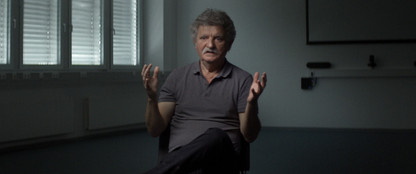
According to the scientist, life is a predictable system of chemical data communications
KineDok in Czechia has a new teaser
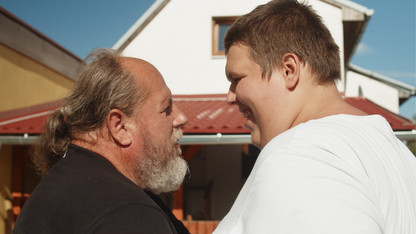
KineDok Joins the Inclusive Film Festival at Kino Úsmev, Košice
We live the documentary film, be there with us.
Start each month with a fresh dose of information. Subscribe to the newsletter.
I hereby consent to the processing of the personal data.

Organizer
Screenings
KineDok Venues