“I like it when a film emotionally bombards me.” Miro Remo on Better Go Mad in the Wild
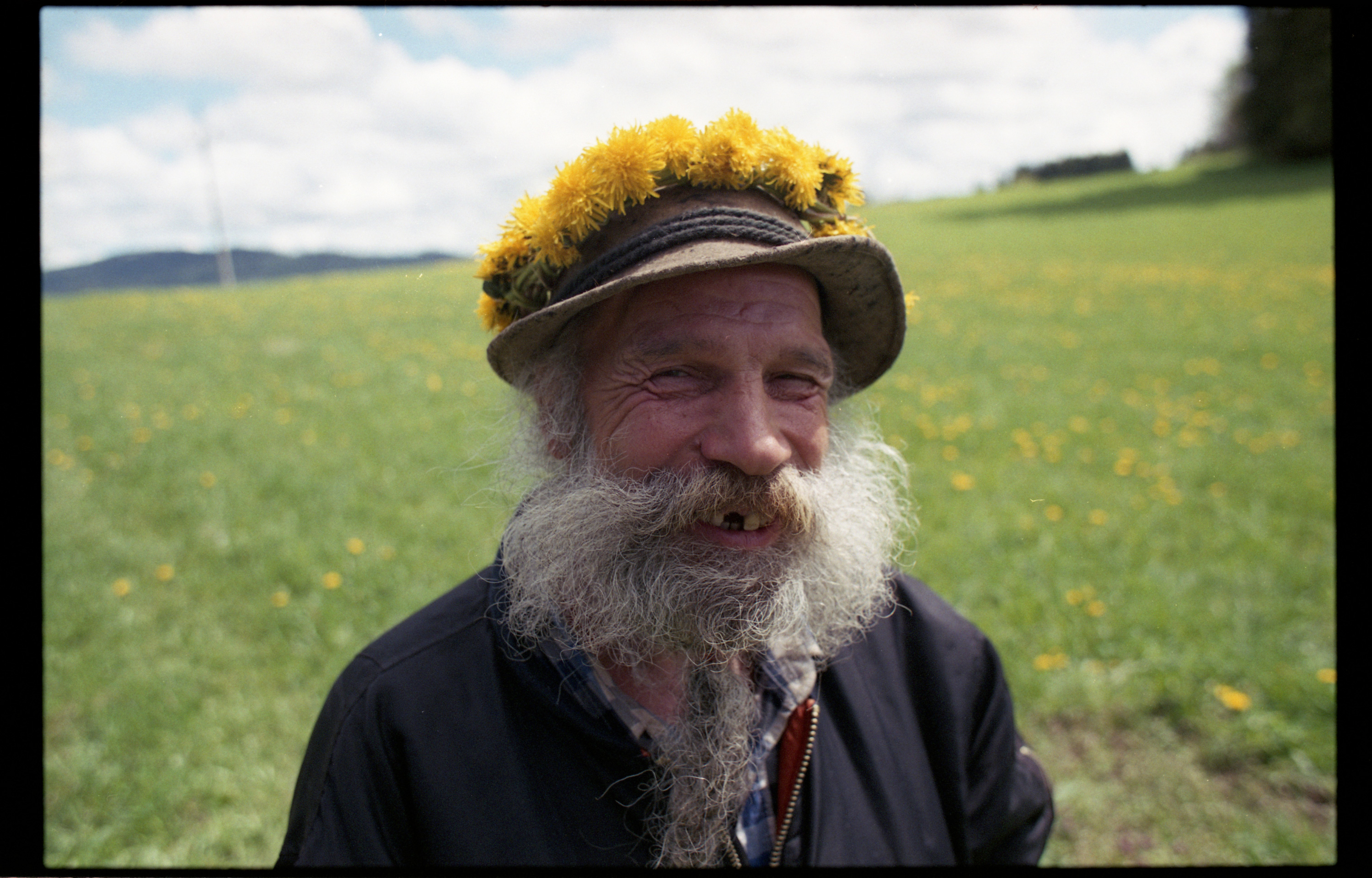
We reached out to director Miro Remo to discuss Better Go Mad in the Wild, his exploratory documentary of twins Franta and Ondřej, who share an intimate life within a remote homestead. The film quickly reveals the tight bond of the pair, and the complexities of their relationship. The documentary itself is drawn from Aleš Palán's novel, and then evolved over five years and sixty days of filming, navigating topics of love, grief, and dependency versus finding individuality.
In this interview, it quickly becomes apparent how much the film's final shape never depended on strict plan nor script, but instead from trust built slowly over time from the strong connection built between Remo and the brothers. Below, Remo speaks candidly about trusting intuition over a conventional production route, and the architecture of finding form for a story that felt authentic to the brothers' lives.
Better Go Mad in the Wild is currently part of our KineDok collection. You can catch it in unconventional venues such as cafés, galleries, community centres and even boats. See the current programme here.
You spent 60 days with Franta and Ondřej over five years. How did that long timeline shape the story you ended up telling versus the one you thought you’d tell at the start? What kind of challenges altered the storyline you intended to tell?
You could say that time changed absolutely everything. I do not start shooting with a precise idea of what the film will be about. In fact, at the beginning, I know nothing. I write scripts and treatments largely just for funds and television networks to secure financing. This film was no different.
However, I sensed from the very first moment that it could be a fascinating journey, not just for the film itself, but for my own life as well. I was captivated by how free the people in front of my camera suddenly were. They were so magical, in many ways so similar, and yet internally completely different.
At first, the story seemed like a lighthearted double portrait of two totally eccentric twins, but it lacked a central, deeper theme. We had great visual backdrops, the house, the animals, nature, but there was also apprehension present on the brothers’ side. Franta and Ondra were afraid of coming across as outsiders or alcoholics in the film. They did not want to be shown in such an explicit light.
After about twenty days of shooting, however, everything broke open. Suddenly, we were filming a movie about the toughest questions in life, a deep reflection on their shared existence wrapped in a magical visual style. I combined my initial excitement for their magical world with a relatively heavy theme, a reflection on their entire lives through burning questions about it. Yet, I always kept in mind that I wanted to approach it kindly and, if possible, with the humor they both love. That was key for me. I wanted all of us to find joy in it.
The film blends observational footage with staged, poetic vignettes alongside raw stills of the brothers: the burning snowman, the dividing wall, the mirror, the tree nap scene. How did you decide where documentary ends and invention begins?
Over time, I stopped overthinking this question. A film only truly starts to interest me the moment it portrays something I have never seen or experienced in life, something I thought might not even exist. And when it does so by tapping into my most sensitive perceptual senses, I love it. I like it when a film emotionally bombards me.
What means it uses to achieve this, I do not really care. What matters is that these means support the story rather than destroy it. Finding an adequate form is just as challenging as finding a suitable topic. Both must be in perfect harmony, like an architect and a builder constructing a house.
And how did I decide? Purely intuitively. Like a young child in a fairy tale, when something enchanted me, I did not care what was staged and what was documentary. After all, it was the reality we were filming, a reality taking place right there and then.
Giving voice-over lines to the cow is such a bold choice. What made you trust that device instead of a more conventional narrator?
It was a bit of a rescue operation, a pragmatic step. It was the last formal motif we added to the film to gently suggest to a less arthouse audience how to read the story and what it was actually about. At the same time, the intervention felt very funny and unusual to us, exactly like the world we found ourselves in.
In this film, the cows answer the basic questions the viewer asks while watching: Where did they come from? Why does Franta only have one arm? What was their childhood like? I did not want the two of them to dwell on these facts. I was examining them against the backdrop of their current relationship.
Just as a fun side note: the cow was ultimately voiced by a man, the very same actor Jiří Lábus who dubs Marge Simpson in the Czech Republic. We tried Czech actresses as well, but it was far too literal, far too normal. We did not want anyone to interpret it as us turning women into cows. We thought that if a cow spoke with a male voice, it would lend the right amount of perspective and humor.
The film grew out of Aleš Palán’s book, and you went on to co-write the screenplay together — how did that collaboration work, and where did your vision and his diverge?
Aleš was an excellent guide. Without him, we probably would have never gotten to the twins. We wrote the first version of the screenplay together, which also included other recluses from his book. Back then, Franta and Ondra could not imagine an entire film resting solely on them. But those other characters died of cancer relatively quickly.
In principle, our visions did not diverge. We are quite close in our thinking. Aleš is perhaps more of a spiritualist and less of a dreamer than I am, which also relates to the time he devoted to the subject. He spent about a week in total with the twins, which was enough for him to write a great book that was a huge success and fascinated tens of thousands of people, including myself.
However, I had the privilege of becoming their friend. Our lives became much more intertwined, as we spent over a hundred days together, sixty of which were spent filming. Once I was sure Franta and Ondra would let me go exactly where I wanted, into the topics that deeply interested me, I chose the theme of their mutual love, tested every day of their sixty years of living together. To me, they were like a married couple sticking together for a lifetime. I explored the tension in their relationship and tried to understand it.
That was my new screenplay. At one point, while filming in the kitchen where they were both yelling at each other, I realized we had it, that we had brought it to a close. I knew right then that the film was finished and that it spoke precisely about what had fascinated me.
The film offers almost no context about the brothers’ past, including their resistance to the Communist regime. Was that ambiguity intentional, and what did you want the audience to sit with instead of explanation?
The book was more generous in this regard. It provided plenty of facts. It is not that I originally did not want the film to be that way too, I like fulfilling audience expectations, but here it simply did not work. From the start, this film was too eccentric and poetic to bear fact-heavy passages. Ultimately, even the little we learn about their past is told by the cow, who, if you look closely, is the only rationally thinking character in the film.
I perceived the quality of this film as residing in the magical space both of them lived in. I tried to preserve it as authentically as possible, just as I had gradually discovered it myself. We exchanged facts about life for feelings about life. I minimized everything that disrupted this magical, sensual effect, but just enough so that we remained understandable.
That was also my biggest directorial dilemma: Should a film like this even be understandable? Should it not have been even wilder on this issue? In the end, I chose a more viewer-friendly form. To this day, I sometimes ask myself whether it was the right decision.
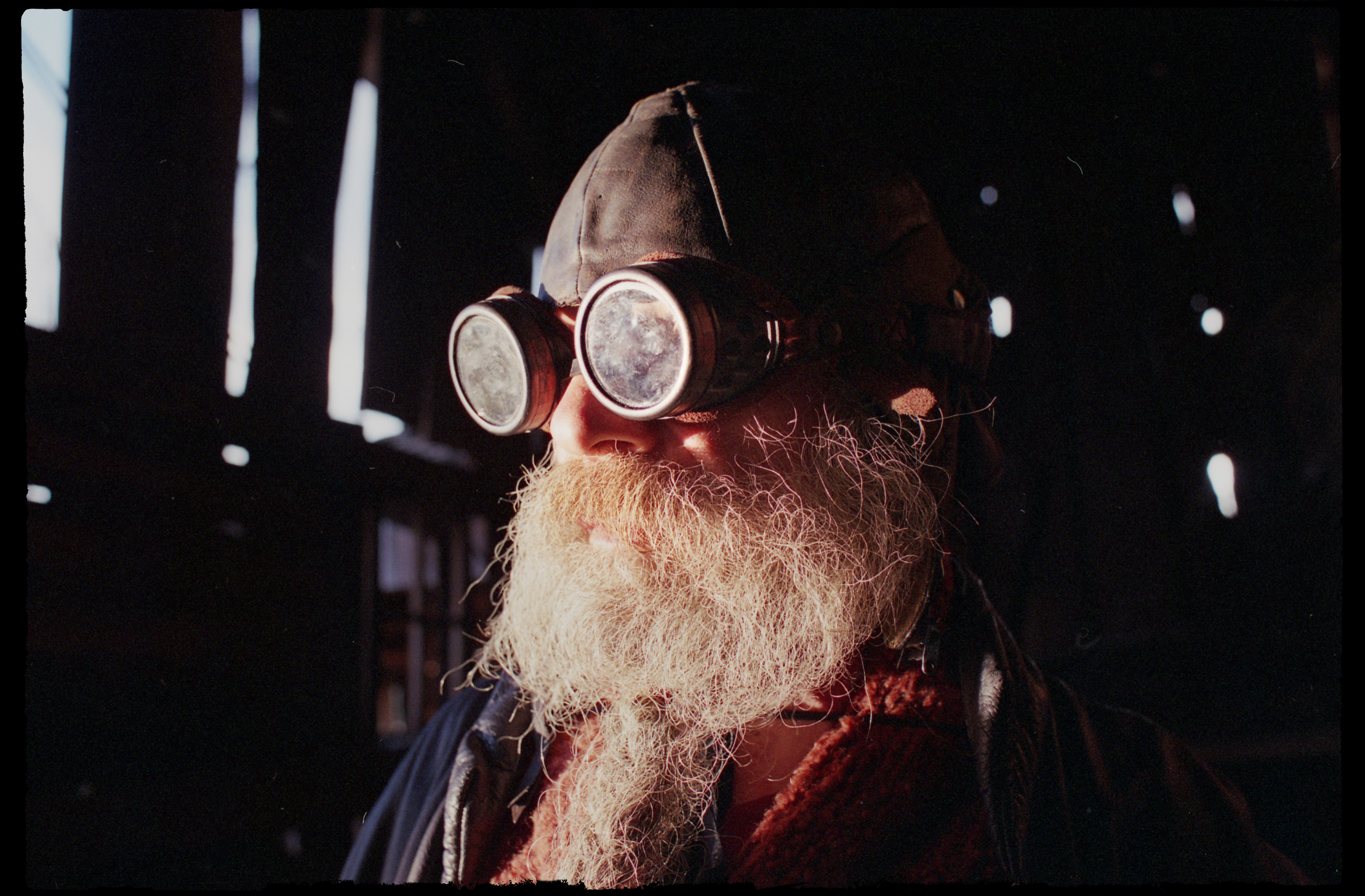
Franta and Ondřej are twins who are identical yet fundamentally different — one seeking freedom, whereas one needs routine. What did that tension reveal to you about the nature of the bond itself?
I was fascinated by how different they could be, yet so much the same. In these positions, they were at absolute opposite extremes. I looked not only for what divided them, but mainly for what united them.
The bond they created was a reflection of all these contradictions, yet at the end of the day, they stayed together until one of them passed away forever. In this respect, it is actually a romantic film for me. It fulfilled the idea of a heavily tested, yet eternal love. How many of us could endure something like that?
You describe “meeting” them while on vacation. What was the moment you knew this was a film, and how did you earn their trust to film something this intimate?
As with many other things in my life, my father, a huge film enthusiast, played a key role here. I was on vacation with him when he handed me Palán’s book, saying it was great material for a documentary. He was right. I could not put the book down, and a few days later, I contacted Aleš Palán to introduce me to the fascinating world from his book.
Trust is earned over time. It is the exact same process as in everyday life. I was open, I listened to them, and I let them make the decisions on important matters. I wanted them to feel free. I had to earn their trust since I wanted to shoot an intimate film, whereas they won me over immediately.
After two years, we were friends for life. The film even merged with their own existence. They lived the film, and it was their last artistic endeavor. To me, they were always artists, co-creators of the film.
How involved were you in shaping that musical identity of the film against the visuals? What was the process like working alongside the composer Adam Matej?
For me, music is another narrator of the film, its additional voice. I try to use it to target the strongest emotions a person is capable of processing. I keep searching for it until I achieve that effect of total audio visual immersion. It was not easy at all. The story is very unusual. In the end, the main musical motif is the symphonic poem Vltava from Bedřich Smetana’s composition My Country. The Vltava is a nearby river where Franta finds the truth, a mirror, an artifact that also plays a very important role in the film, and brings it home.
Adam was in charge of the less prominent musical motifs. He was also the film sound designer, recording sound directly on set. Therefore, he knew the environment, the conditions, and the brothers themselves very well. We were like one family.
He composed the music based on observing sounds directly on set. Here and there, he even recorded some in advance for these purposes. I knew we already had a grand theme in the film and would not compete musically with Smetana’s Vltava. We were looking for something more subtle, more rural, and I think he handled it brilliantly. So much so that I initially had trouble appreciating the artistic qualities of his work. But I gave it time, and in the end, I used almost all the music in the film that I originally thought I would not use.
I made a compromise in my usually authoritative directorial mindset and edited scenes according to his musical motifs. Interestingly, I had never done it that way before. Usually, I have to trust the music completely first before I work with it. But with this film, many things were different.
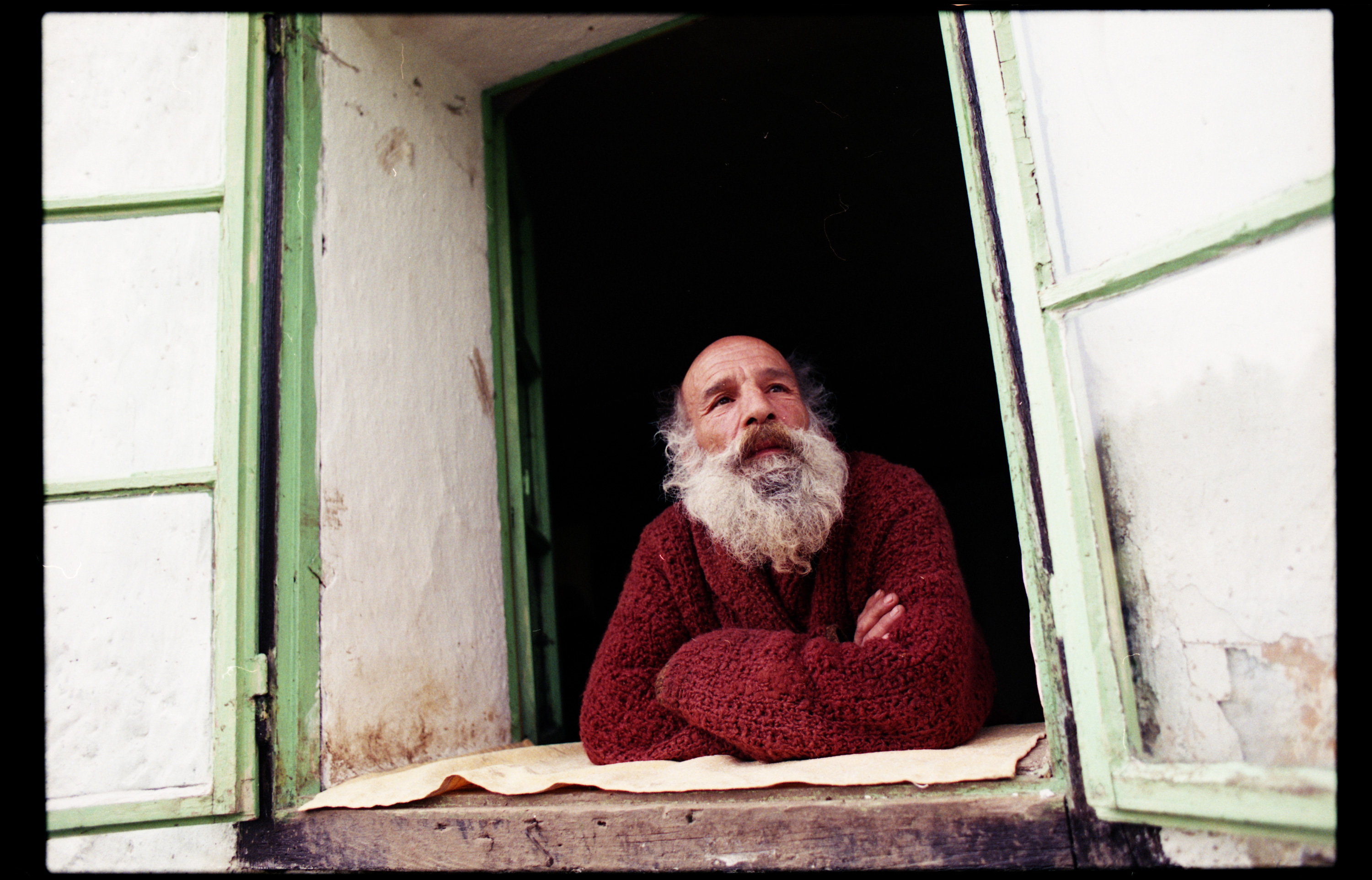
The film doesn’t shy away from an unexpected death late in the story. How did you navigate filming and including a moment like that with care for the brothers and their family?
After František’s death, nothing was added to the film except for the final title card with his date of birth and death. It is remarkable and at the same time deeply sad how this story ultimately came to a close. All the more so because the film reflects heavily on the theme of departure right from the beginning.
Thanks to the deep friendship that formed between us, even this cruel departure was somehow more forgiving. Never in my life have I experienced such an immense emotional contrast: one day you win Karlovy Vary, one of the biggest festivals in the world, and the next morning on your way home, you learn that the person thanks to whom the film came into being is dead. But death did not separate us. Franta’s legacy is flying through cinemas around the world today.
There is also a magical story tied to this. Both brothers once agreed that when one of them left, he would return to tell the other what it was like in heaven or hell, so the other would know and not be afraid of death. Just as they helped each other their whole lives, they wanted to help each other beyond the grave. And so it happened. Franta appeared to Ondra three days after his death. He looked very content, was wearing his best suit, was smiling, and told us not to worry about it or ruin our lives. Everything was supposedly in perfect order. He was beaming with happiness. He sent us a signal that we should be at peace. It helped immensely. God knows what would have happened if that moment had not occurred.
Many people viewed Franta as an outsider who never achieved anything because he never managed to finish it. He dreamed of building a perpetual motion machine. The film was perhaps the only big thing in his life he managed to complete.
Considering the win of the Crystal Globe at Karlovy Vary, how has that recognition changed how you think about the responsibility of telling stories about people living so far outside conventional society? How did you create a connection and common ground for the audience who has not experienced this way of living?
It did not change my view. To me, these outsiders are, to a large extent, heroes who can face the modern world often better than we can. I have known this for almost 20 years, ever since I worked on a portrait of my uncle Ľuboš called Arsy Versy. It was a very similar film in some ways, outsiderish, yet gentle. Truth and love always win with them. I am glad the jury in Vary recognized it too. At times, I was worried whether they would even be able to read that from our film.
And as for that connection with the viewer? Just as we resemble each other on the outside, we resemble each other on the inside as well. We know what makes us human, and that is where we meet at a truly high, I would even say heavenly, level. The fact that we are capable of doing good beyond personal gain is so fascinating that it naturally captures the attention of all of us who are capable of deep feeling.
Almost every one of us knows what closeness, intimacy, and love are, and how exciting yet demanding their various forms can be. Thus, connecting with the viewer is simply about the questions the film raises. It does so in a fairy tale manner, but it asks questions from films for adults.
For audiences encountering the film and that particular lifestyle for the first time, what do you hope they take away about the value of solitude versus connection?
That, above all, we are all very similar human beings with different life paths, but shared life questions. They should take away the knowledge of what an immense, priceless value mutual understanding, closeness, friendship, or pure human love has in life.
Interview by: Ruby Marr
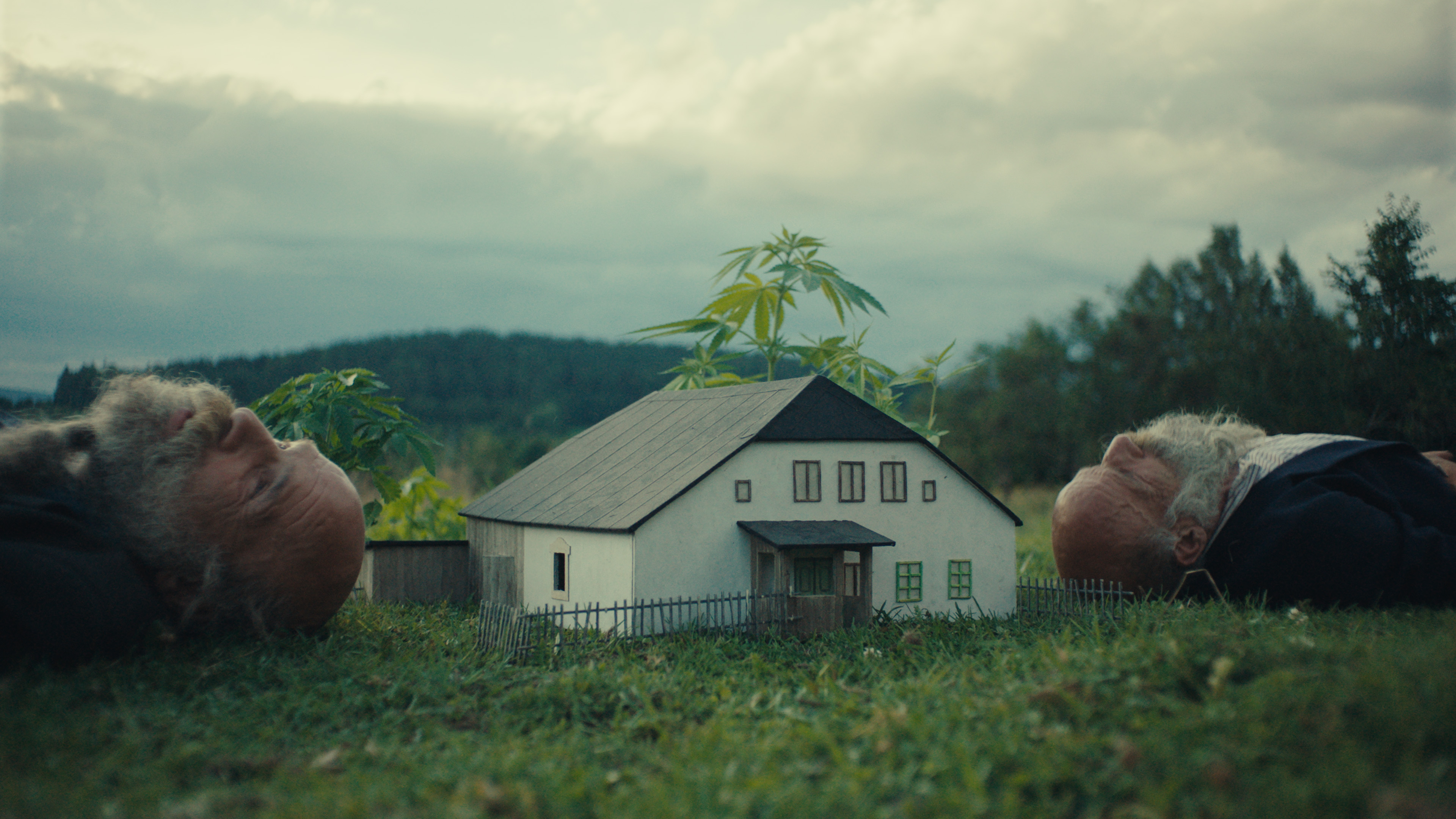
Better Go Mad in the Wild
Feel-good, Family, Portrait
More Articles by topic KineDok interviews
We live the documentary film, be there with us.
Start each month with a fresh dose of information. Subscribe to the newsletter.
I hereby consent to the processing of the personal data.

Organizer
Screenings
KineDok Venues